
High-precision UWB (ultra-wideband) positioning has stepped out of the laboratory and into large-scale commercial use, becoming a core underlying technology behind intelligent upgrades across every industry. With centimeter-level positioning, high security and strong interference immunity, UWB is landing fast in five fields — consumer electronics, smart vehicles, intelligent robotics, smart manufacturing and spatial computing — and the industry has officially entered a period of rapid growth.
Following the trends that are reshaping the industry, Chipsbank walks you through the technical value of UWB, the scenarios where it is already being deployed, and what the future holds.
Unlike conventional wireless technologies such as Bluetooth and Wi-Fi, UWB transmits data using extremely short pulses and measures distance by precisely timing how long the signal takes to travel. It stays stable even in difficult conditions such as obstruction and multi-signal interference, and the way it measures distance effectively defeats the relay attacks that commonly target car keys and access control systems, building a solid security barrier for intelligent interaction. That is the core reason so many technology companies are placing their bets here.
After years of technical refinement and market cultivation, 2026 marks a leap forward for the UWB industry. The technology is no longer confined to simple ranging and positioning; it has become full-blown spatial sensing infrastructure, and the window for explosive growth has arrived.
1. Consumer electronics: penetration accelerates as adoption keeps climbing
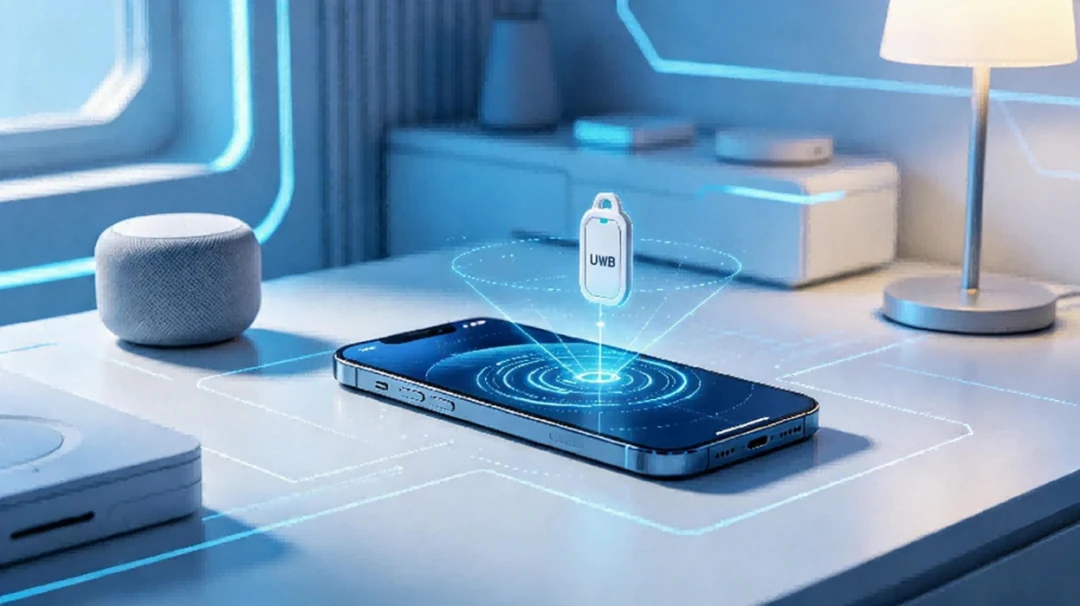
Consumer electronics is where UWB first educated the market. It now ships on most mainstream flagship models and is steadily trickling down to mid-range devices. Drawing on powerful spatial awareness, phones and wearables can deliver features that conventional wireless technology simply cannot: finding accessories, identifying device orientation, seamless proximity connection and cross-terminal coordination.
2. Smart vehicles: the main growth engine, now standard on new cars
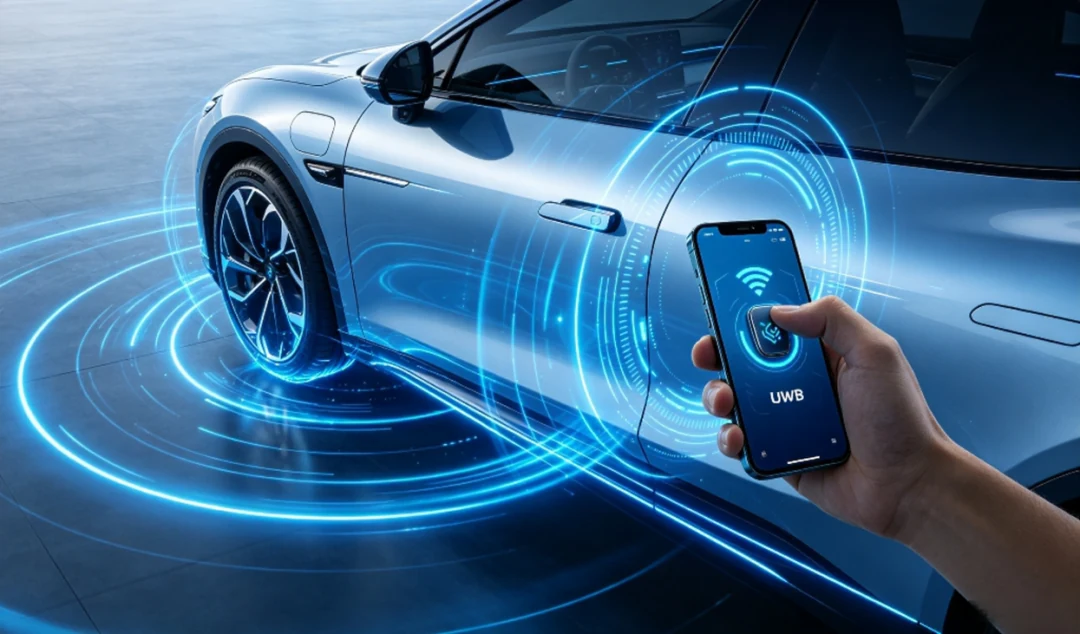
Smart vehicles are the fastest-growing UWB track today. Conventional keyless entry systems carry known security holes, and UWB closes that gap perfectly. Leading automakers and new-energy brands in China and overseas are making UWB digital car keys standard equipment, enabling secure vehicle unlocking, proximity-based welcome gestures and personalised cabin settings, and reshaping the human-vehicle interaction from the ground up.
3. Intelligent robotics: fusing multiple sensors for stronger spatial awareness
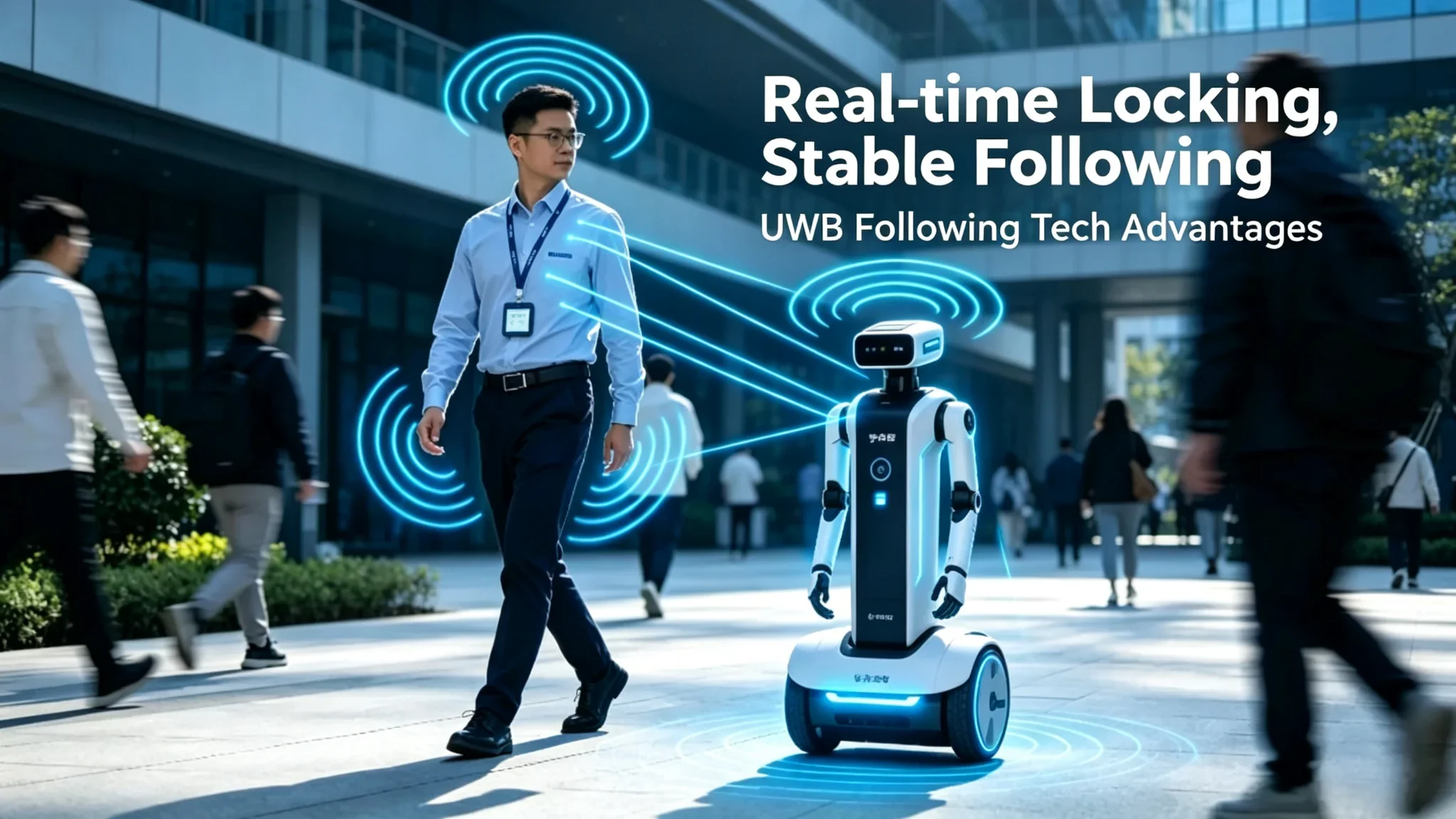
For industrial operations, logistics delivery and humanoid robots, accurate environmental perception is the foundation of stable operation. Purely visual navigation is easily thrown off by lighting and obstacles and is not dependable enough on its own. The industry has therefore converged on a UWB + LiDAR + vision sensor fusion architecture, relying on UWB to output stable, precise position data. It is widely used in smart factories, warehouse parks and outdoor delivery, helping robots achieve accurate positioning and reliable person following.
4. Smart manufacturing: enabling the digital factory and delivering Industry 4.0
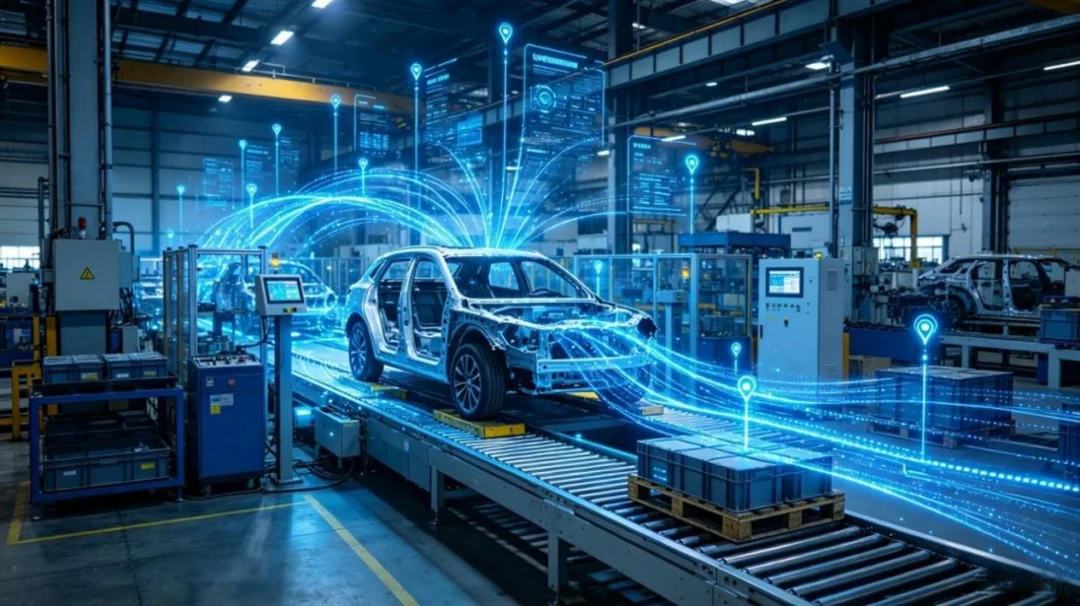
In the wave of smart manufacturing transformation, UWB has become an important lever for building digital factories and advancing Industry 4.0. Location information is now an indispensable new data resource in industrial production. Once a company deploys a UWB real-time locating system, it can monitor workers, production equipment and materials in motion across the entire process, streamlining production flows, raising overall operational efficiency and cutting total management cost. UWB is especially valuable in niche scenarios such as hazardous area control, smart warehouse management and high-value asset tracking.
5. Spatial computing: widening the application frontier, building the collaboration layer
At the same time, the convergence of spatial computing and artificial intelligence is pushing the boundaries of UWB even further. As AR smart glasses, digital twins, smart homes and smart campuses rise quickly, smart devices are no longer satisfied with basic network connectivity; they need to perceive physical space in depth and judge the relative positions of objects. UWB builds out a high-precision spatial coordinate system that lets devices link up and cooperate intelligently in every kind of scenario. The more tightly AI is woven into physical environments, the more strategic value UWB holds as the underlying spatial sensing infrastructure.
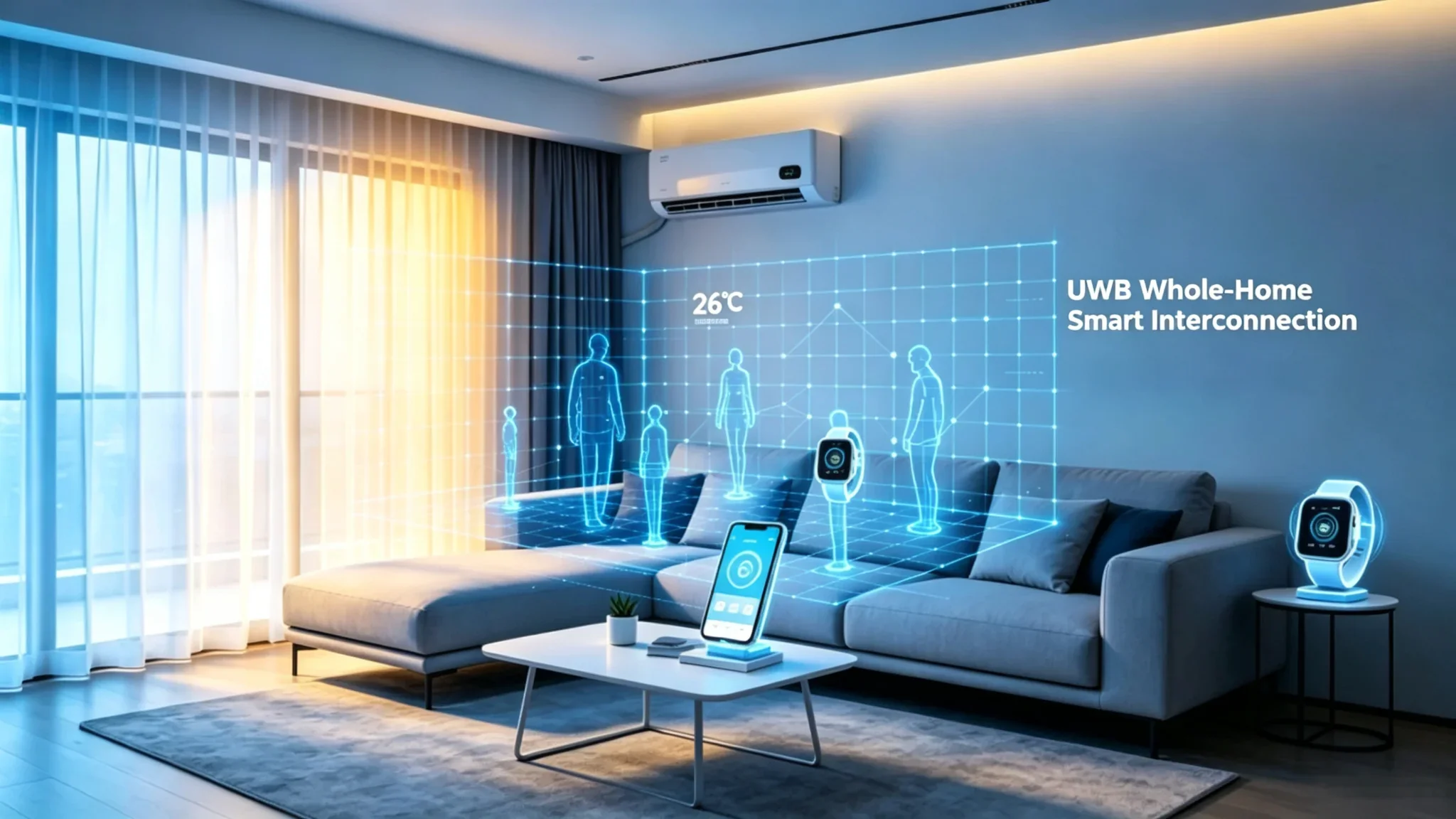
The UWB industry looks healthy overall, but constraints such as hardware module cost, antenna design and tuning, industry certification and fragmented ecosystem standards still keep the technology out of ultra-cost-sensitive devices such as entry-level thousand-yuan phones. The direction, however, is perfectly clear: as domestic UWB chip technology keeps breaking through, hardware cost keeps falling and cross-brand interoperability standards gradually converge, UWB's trickle-down is inevitable. Industry forecasts suggest that over the next two to three years mid-range smartphones will adopt UWB at scale, and that by around 2028 more than 80 percent of smartphones worldwide will ship with it as standard.
UWB has grown from a single wireless positioning tool into the spatial sensing foundation of an interconnected world. With five tracks pulling together, an ecosystem worth hundreds of billions is rapidly taking shape.

Advancing the UWB industry together, expanding the intelligent connected future. Whether you are exploring a business partnership, a deployment scenario, or an entirely new application idea, we look forward to talking with you, working together and unlocking more of what UWB can do.
Shenzhen Chipsbank Percomm Technologies Co., Ltd.
Tel: 0755-88835998
E-mail: uwb@chipsbank.com
Address: 7F, Building 12, Phase II, Software Park, Kejizhong 2nd Road, Yuehai Street, Nanshan District, Shenzhen