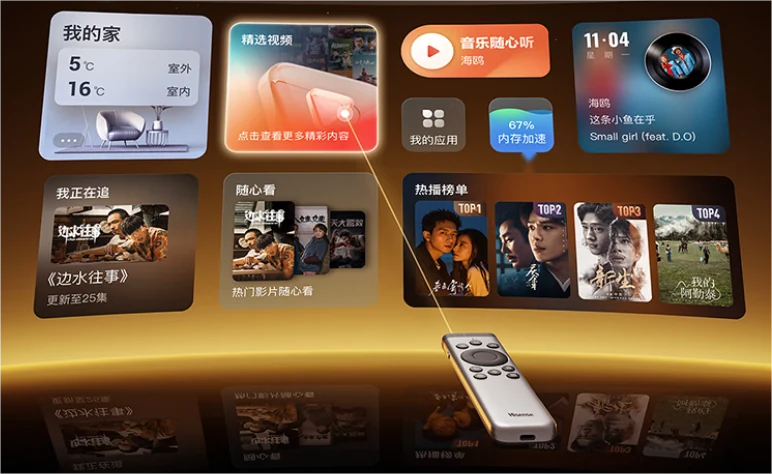
Smart TV
Tap apps, switch channels, scrub the timeline — goodbye to arrow-key hunting.

A turnkey UWB pointing remote solution from chip and algorithms all the way to mass-production tooling — 1T3R RF chain, RC2+TV3 antenna, CMOS SoC, and AOA/Fusion algorithms. Production-ready in three months.
The same UWB pointing remote design covers big-screen interactions from living-room TV to the boardroom.
Tap apps, switch channels, scrub the timeline — goodbye to arrow-key hunting.
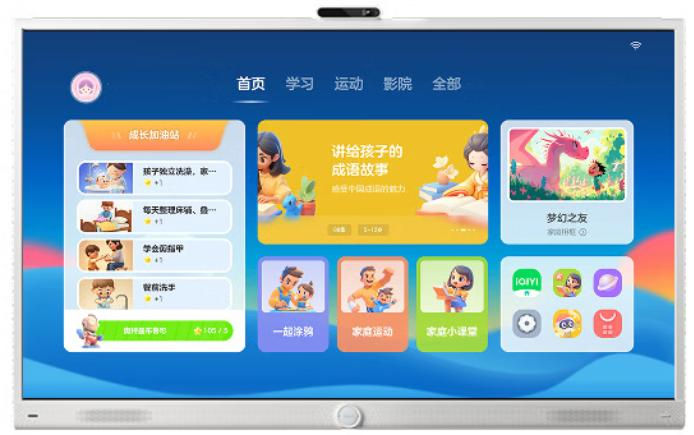
Tap, drag and annotate lessons as naturally as on a tablet.
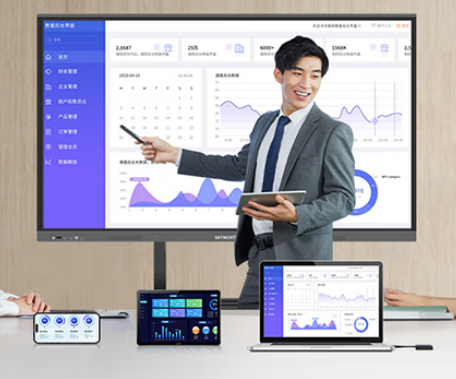
Walk through dashboards, flip pages and present — one remote for the whole room.
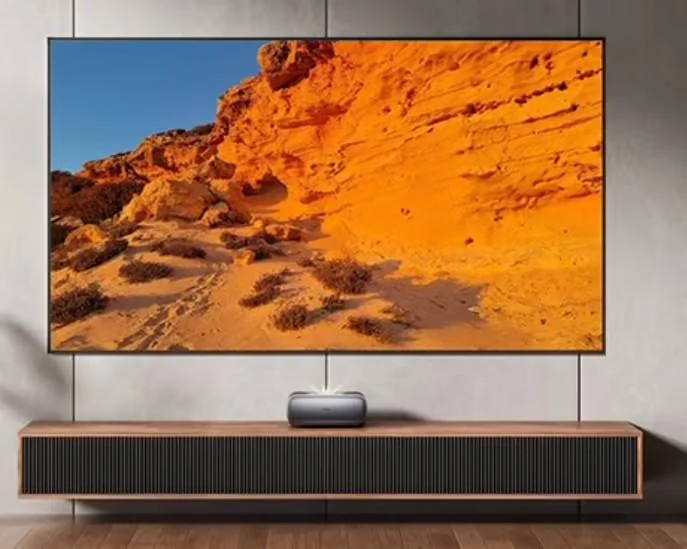
Point-to-control fits ultra-short-throw and laser-projection setups naturally.
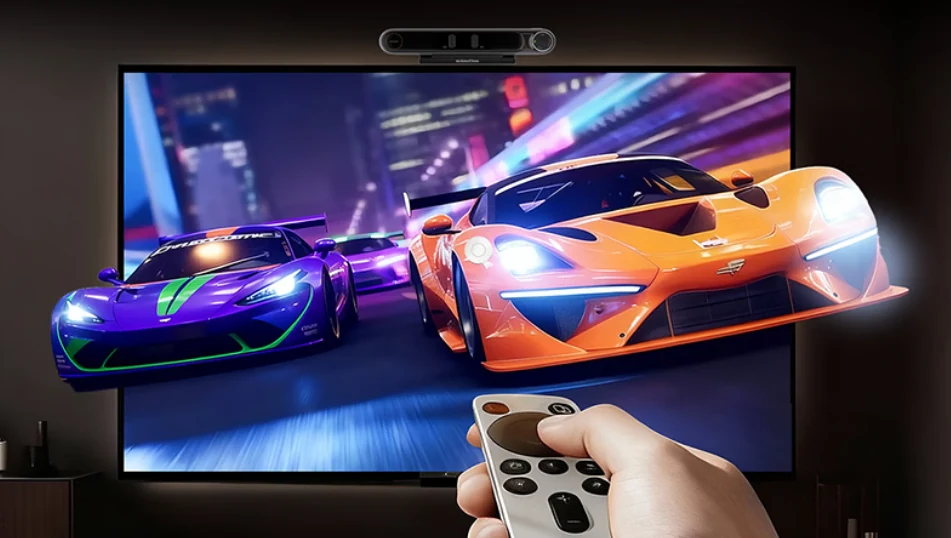
A Dongle at the box side upgrades any TV to pointing — no TV redesign needed.
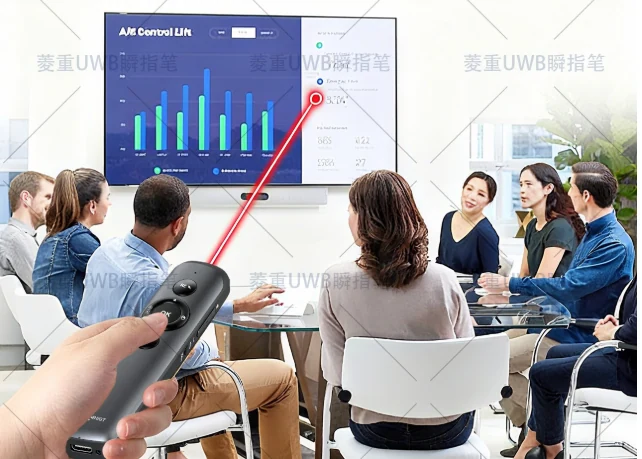
Flip slides and highlight from the back of the room — a true IR-pointer replacement.
Six dimensions that define the next generation of big-screen interaction.
Point to control — as intuitive as a mouse. No button memory, no cursor hunting.
Tap apps, switch channels, scrub the timeline — far more efficient than arrow keys.
Cursor, swipe and gesture — as familiar as your phone or tablet, smoother on the big screen.
One remote for both TV and set-top box — no more juggling multiple controllers.
Pointing handles the complexity, so the remote can shed buttons and look better.
Differentiated features lift the product tier, refine the experience and strengthen product differentiation and support premium positioning.
At Google I/O 2026 (May 20), Google shipped developer tools that push pointer-remote interaction into the mainstream of the living-room platform — a direct tailwind for UWB pointing remotes.
Google TV + Android TV now reach 300M+ monthly active devices — the living room is a distinct, fast-growing app platform.
Pointer remotes bring motion-controlled input to the big screen, enabling far faster navigation across the Home page and inside content-heavy apps.
Google officially calls on developers to support pointer remotes: declare android.software.leanback.supports_touch and adapt hover states, scrollable containers and cursor clicks.
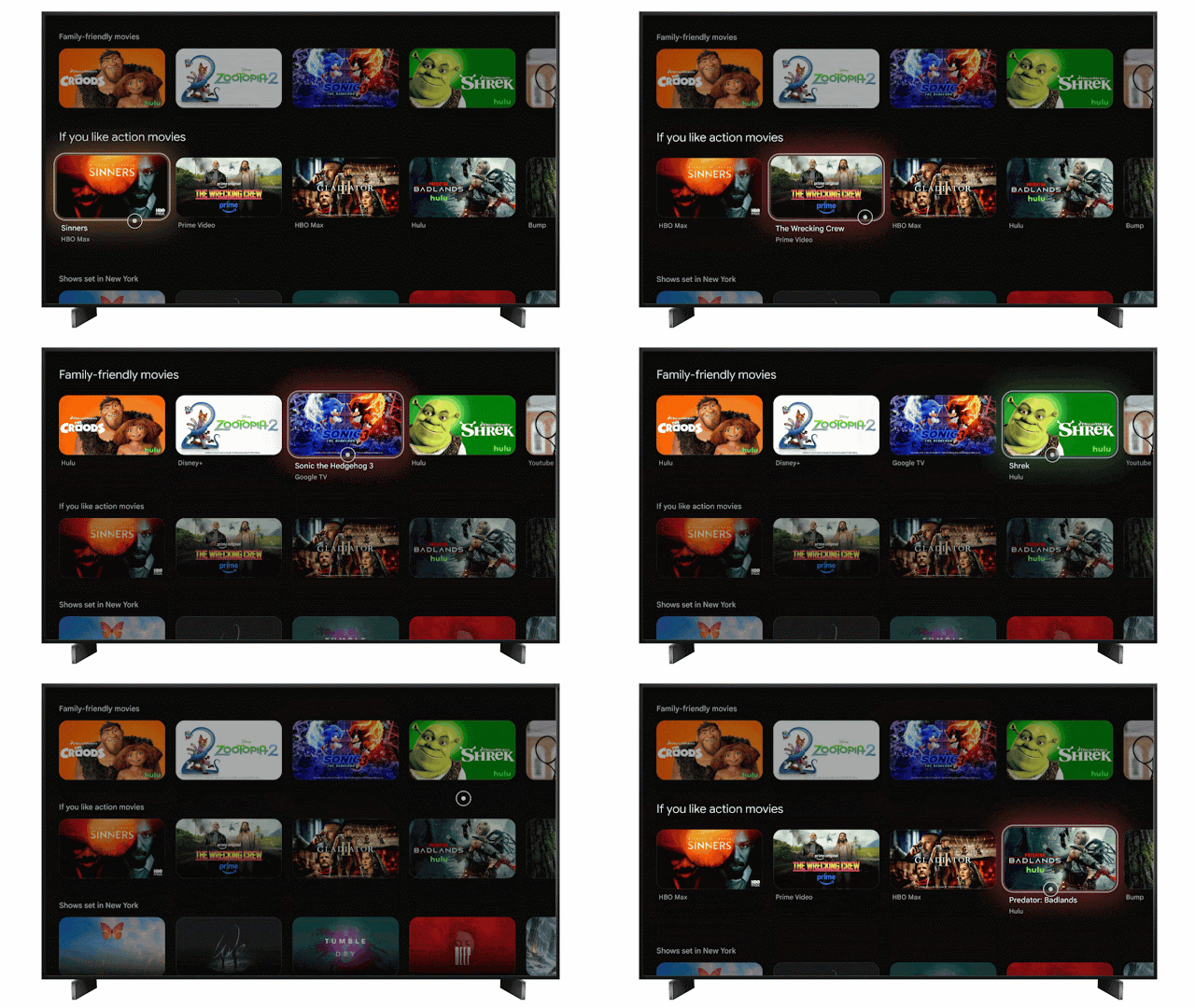
The D-pad era is ending. As remotes gain motion sensing, apps that only understand arrow keys will feel broken. Google is steering the whole ecosystem toward spatial, pointer-first interaction — and UWB is the best technology base for precise pointing.
Same pointing-remote UX — Chipsbank leads on RF chain, SoC integration, algorithms and production efficiency.
| Item | Chipsbank UWB remote | Other UWB remotes | SparkLink remote |
|---|---|---|---|
| RF chain | 1T3R | Mostly 1T1R or 1T2R | 1T1R |
| Antenna | RC2+TV3 | RC2+TV3 or RC2+TV1 | RC2+TV1, no position info |
| Chip cost | CMOS SoC, low cost | Multi-die, high cost | Non-SoC, low integration |
| AOA algorithm | ±1° accuracy across 90%+ user area; ±45° ELE / ±60° AZI working range | High accuracy at calibration points only; low ELE accuracy, narrow range | Low PDOA accuracy, even worse AOA |
| Fusion algorithm | Fusion algorithm included; matches HW hi/mid/lo sensitivity | Requires extra algorithm, poor experience | No position info, inaccurate pointing |
| Dev cycle | 3 months | Mostly 6+ months | 6+ months |
| Calibration | Single-point | Multi-point | Multi-point |
| Production | 300+ units/hour proven in mass production | — | — |
Three ends working together: BLE pairing, UWB angle-of-arrival, IMU fusion and a Dongle backhaul.
Antenna performance is tightly coupled to mechanical structure. Chipsbank covers simulation, PCB / LDS antenna design, and production validation end to end.
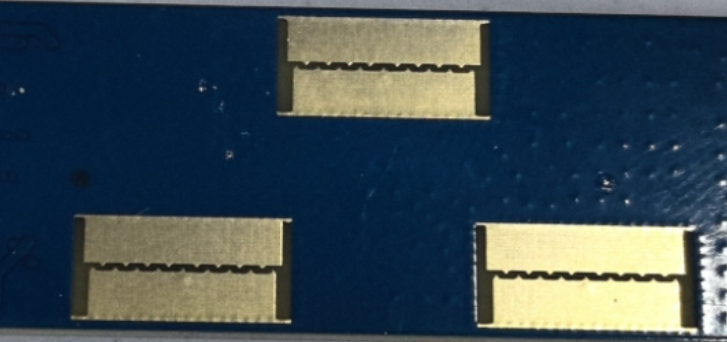
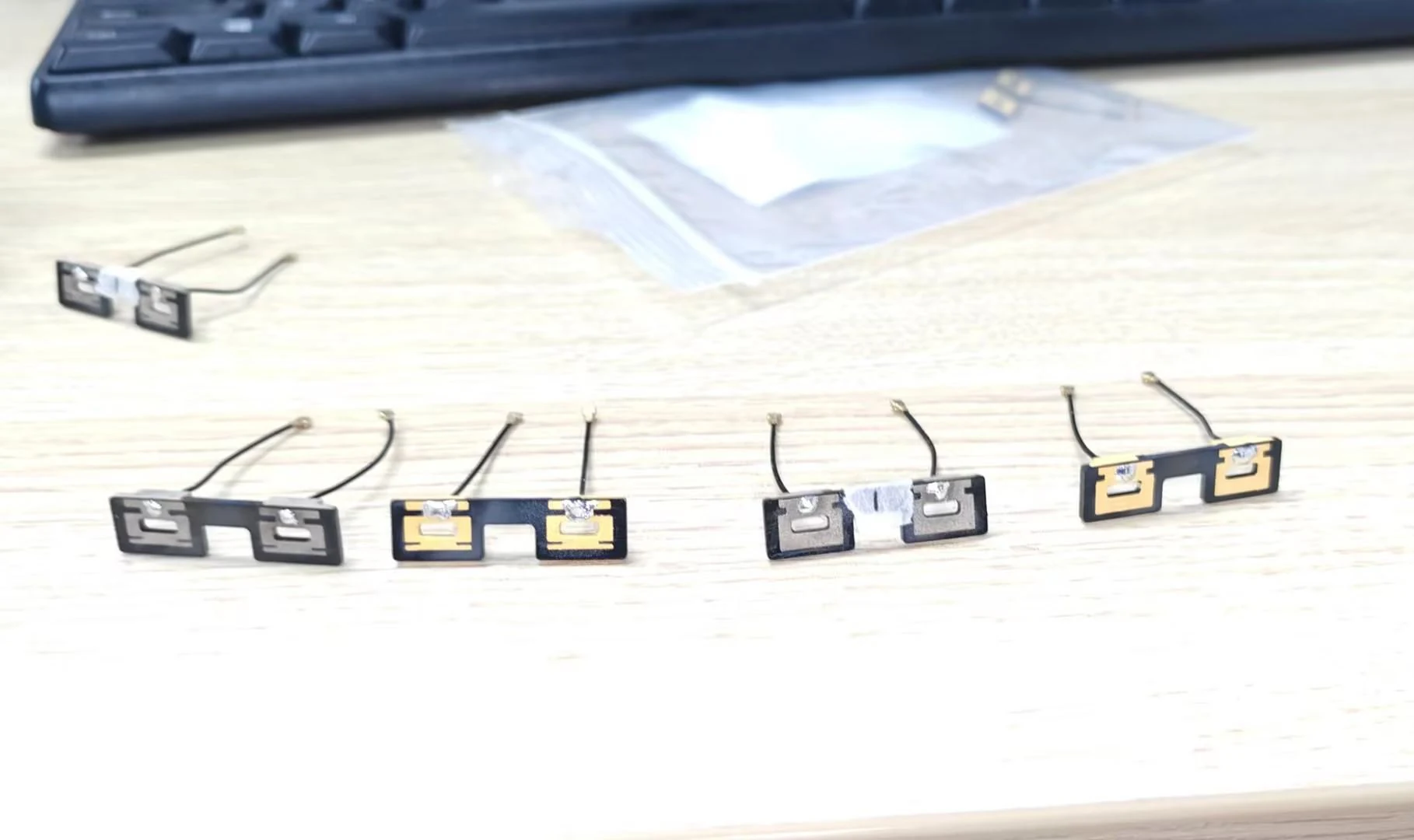
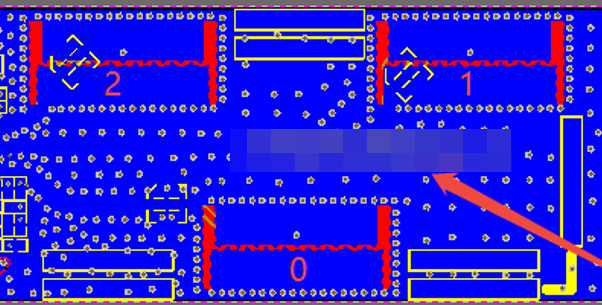
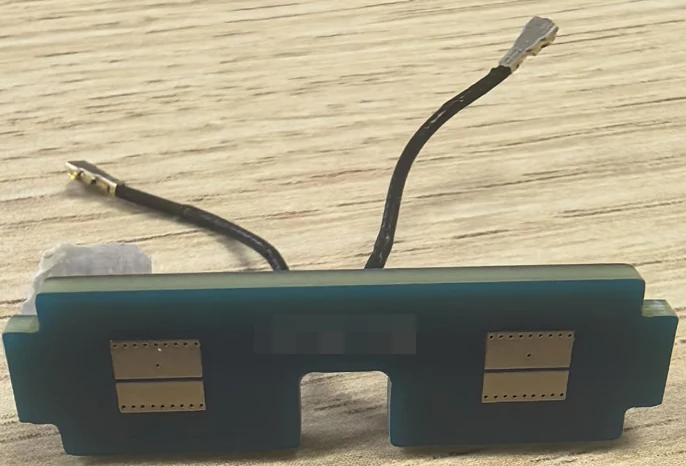
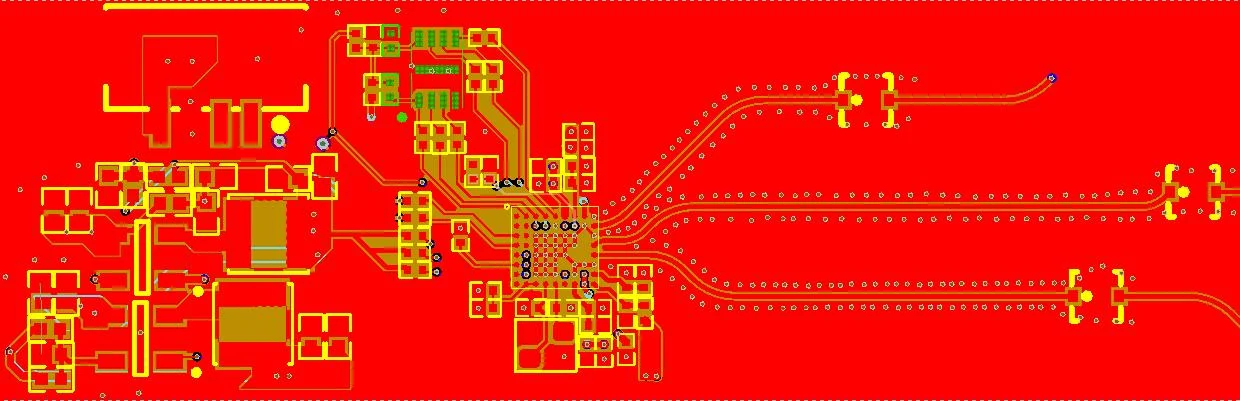
Both the TV receiver and the remote come with full reference designs, plus design-review and test support.
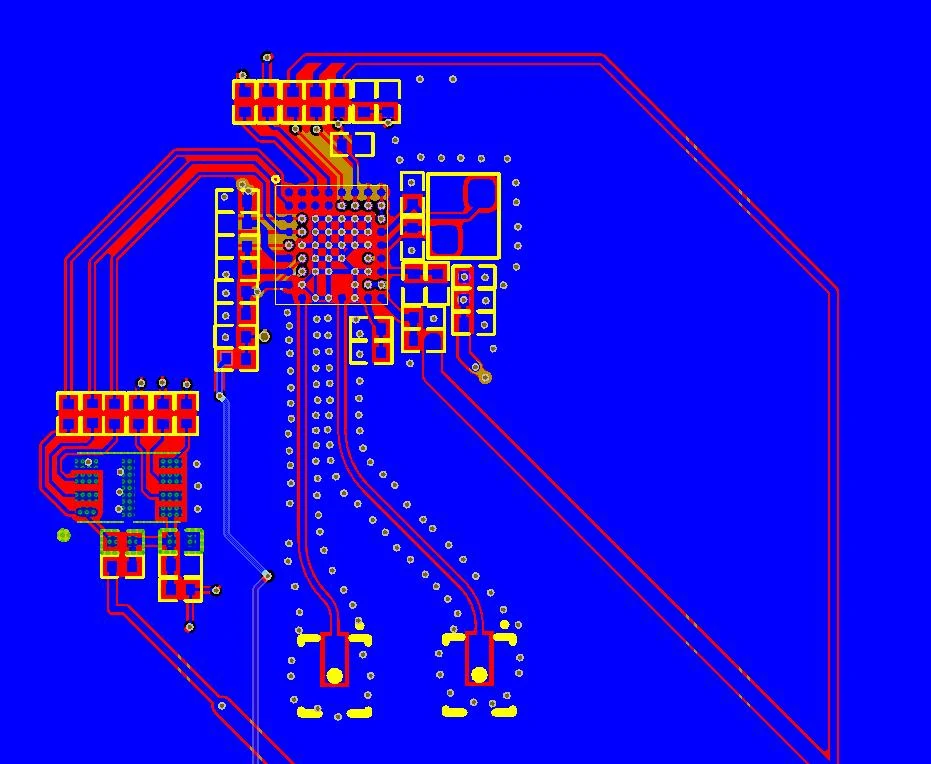
One UWB receiver, two systems in one — precise pointing control, plus radar sensing of people’s presence and orientation.
Today's setups need two separate systems — one for pointing, one for radar sensing. High cost, complex integration.
From reference design and algorithm tuning to production tooling — one-stop delivery, mass production in as little as 3 months.