
With the rapid adoption of UWB (Ultra Wide Band) technology in fields such as precision positioning, pointing remote controls, smart locks, indoor navigation, and radar sensing, the requirements for UWB antennas are becoming ever more demanding.
For traditional wireless communication systems, an antenna that "operates properly, meets VSWR requirements, and offers sufficiently high efficiency" often already satisfies basic needs.
But for UWB positioning products, the antenna does more than transmit signals - it directly affects the determination of distance, direction, and spatial position.
Therefore, the real challenge of UWB antennas is not "getting an antenna built," but rather:
How to keep the antenna's electromagnetic performance stable and controllable within limited product space and a complex system environment, and ultimately meet the system's positioning requirements.
The following shares two typical case studies based on Chipsbank's real engineering experience with UWB pointing remotes and smart locks.

01Pointing Remote ControlSmall-form antennas - how to achieve stable spatial pointing
The biggest difference between a UWB pointing remote and a traditional remote is that it must not only handle wireless communication, but also know where it is pointing.
Therefore, the UWB antenna must participate in acquiring spatial angle and position. Yet the interior of a remote is usually a very compact space, where antenna size is strictly limited and is further affected by structures such as the PCB, battery, buttons, housing, and connectors.
So the real difficulty is not achieving good matching for the antenna in free space, but rather:
Ensuring the antenna retains stable directivity and spatial coverage in the real product environment, despite its limited size.
To address this, Chipsbank adopted a co-design approach for the pointing remote project - miniaturized LDS antennas developed in close coordination with the overall product structure.
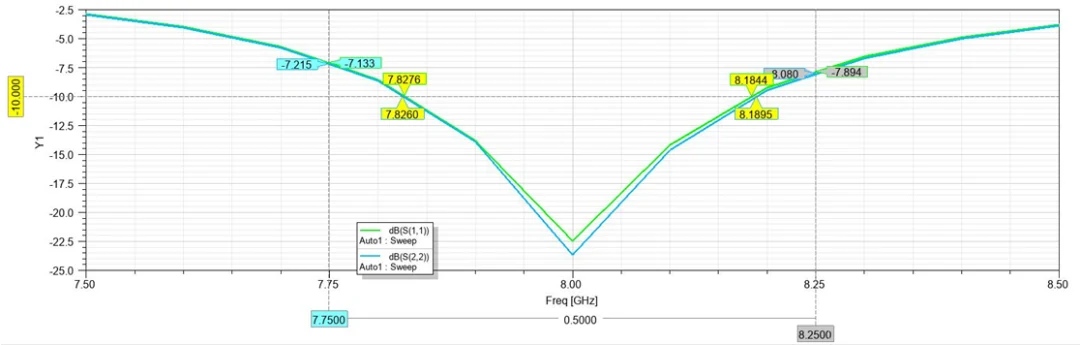
During the design phase, we focused not only on the antenna's own S-parameters and gain, but also brought the housing, battery, PCB, and surrounding structural parts into simulation and optimization.
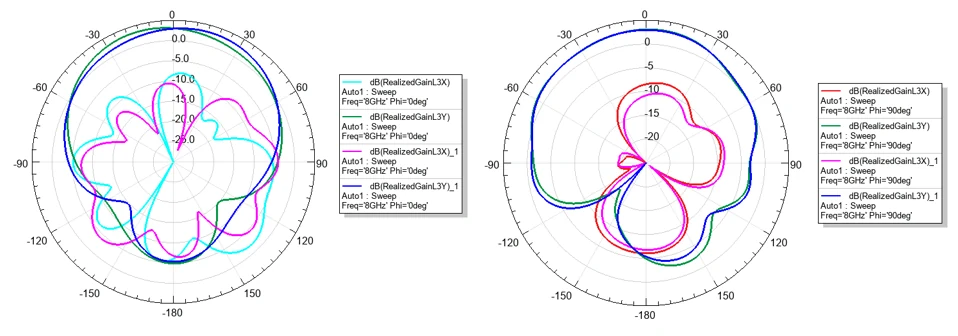
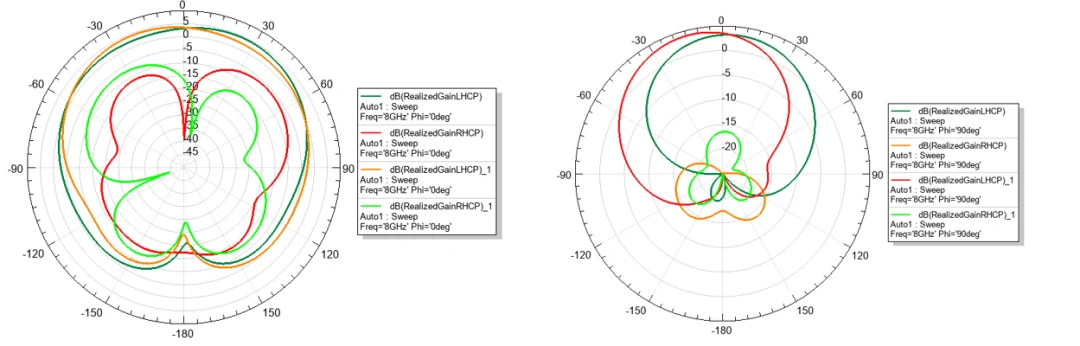
For the small LDS antenna, we also paid close attention to controlling the antenna's current path and radiation direction, so that the limited antenna space delivers the most stable forward radiation characteristics possible and a good cross-polarization ratio.
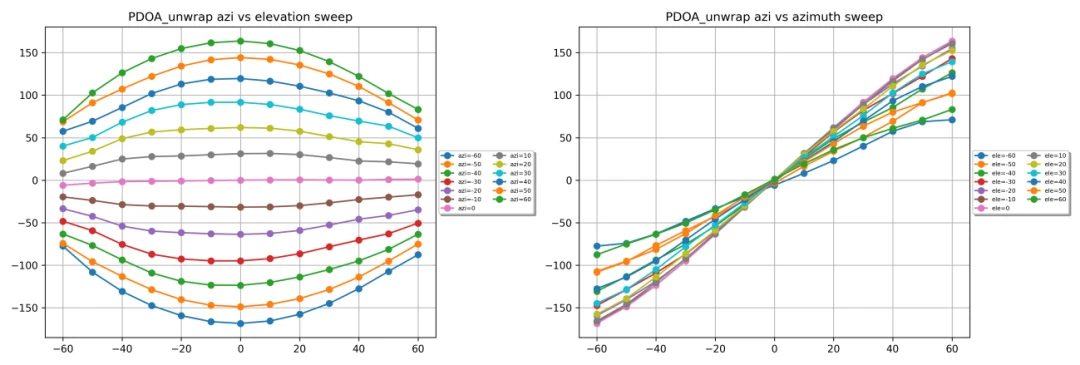
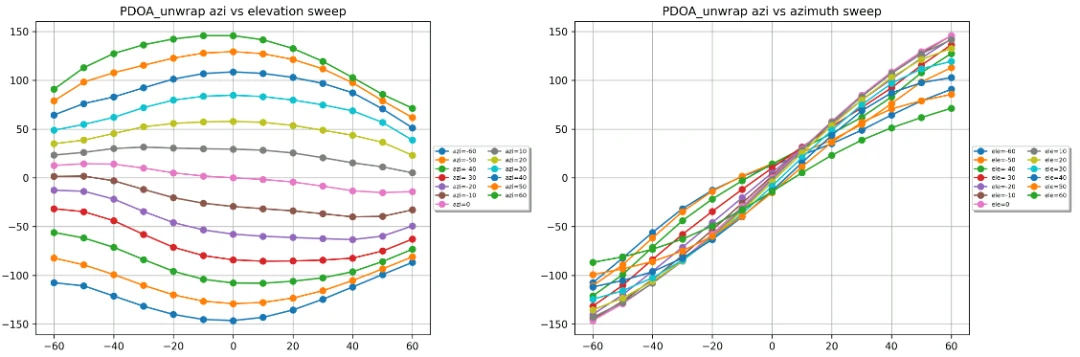
On top of meeting the above requirements, the antenna must exhibit good PDOA performance.
Ultimately, within the remote's limited space, Chipsbank completed the UWB pointing-remote antenna solution and optimized it for the full system environment.
Final results achieved:
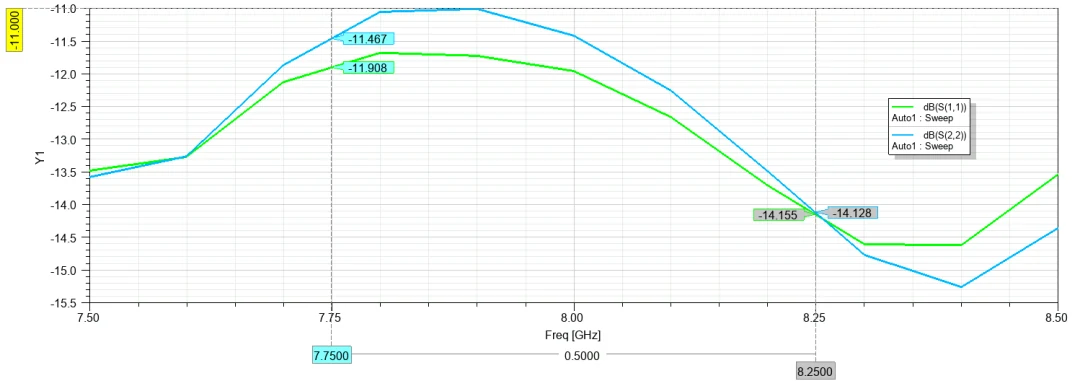
- UWB operating band covers 7.75-8.25 GHz
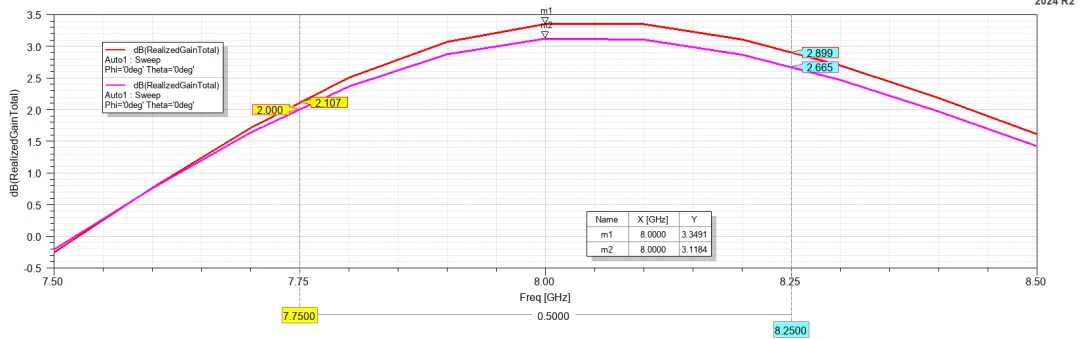
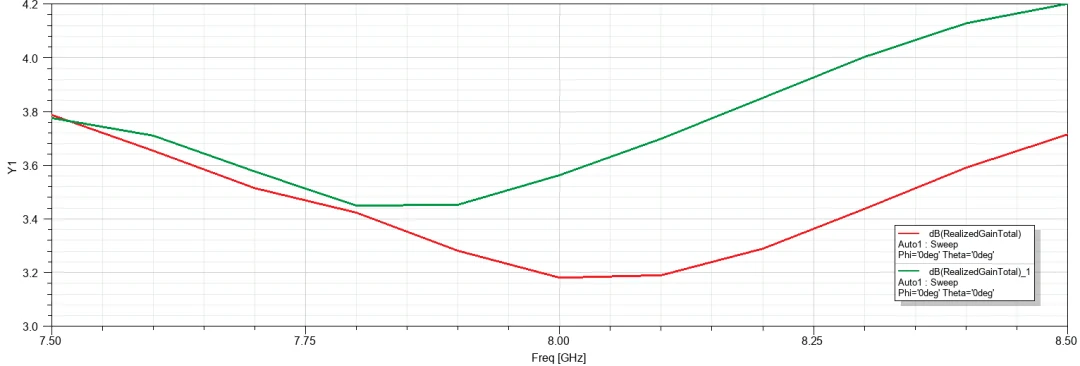
- Peak antenna gain reaches 3 dBi
- Cross-polarization ratio exceeds 10 dB
- Front-to-back ratio reaches 8 dB
- Stable radiation pattern maintained in the actual system environment
- Good PDOA performance
- Meets the spatial positioning / pointing requirements of a pointing remote
What matters most in this case is not any single antenna metric, but rather:
Even within a very limited size, the antenna can still maintain controllable radiation characteristics and ultimately serve the product's spatial pointing function.
This is also a key distinction between small-form UWB antenna design and ordinary wireless communication antenna design.
02Smart LockIn a metal-rich environment, how to keep the UWB antenna working stably?
If the core challenge of the pointing remote is miniaturization and directivity, then another typical challenge of the smart lock is:
Keeping the antenna stable for ranging and angle measurement even in a complex metal environment.
Inside a smart lock there are typically the lock body, metal structures, battery, PCB, and other wireless components.
For an 8 GHz UWB signal, these structures participate in electromagnetic coupling and alter the current distribution near the antenna, thereby affecting:
- Impedance matching
- Gain
- Radiation pattern
- Circular-polarization axial ratio
If the antenna is tuned to its optimal state only in free space, its performance is likely to change significantly once installed into the lock assembly.
Therefore, in lock-product design, Chipsbank places greater emphasis on the co-design of antenna and product structure.
During design, we determine the antenna's position and mounting orientation based on the actual structures such as the lock body and PCB, and analyze via simulation how the surrounding metal structures affect antenna performance.
At the same time, by optimizing the antenna structure and layout, we give the antenna stable broadband performance and spatial coverage within the limited space.
What ultimately needs verification is not merely:
"Does the antenna S11 meet requirements?"
but also:
"After being installed in the lock, does the antenna PDOA value remain stable? Can it still reliably cover the actual usage space?"
Through this design approach - from the individual antenna to the full system - we can effectively reduce the impact of product structural changes on UWB antenna performance, providing a stable RF foundation for the lock's proximity detection, spatial positioning, and seamless-interaction functions.
03Lessons from the Two CasesThe core of UWB antenna design is shifting
Whether it is the pointing remote or the smart lock, the two products differ in structure and requirements, yet the underlying design logic is consistent.
Traditional antenna design focuses more on:
S11, gain, efficiency, bandwidth.
UWB positioning products need to pay further attention to:
radiation pattern, polarization, spatial coverage, and performance stability in the system environment.
Therefore, a UWB antenna is no longer an independent "component," but part of the product's electromagnetic system.
Chipsbank has already developed a variety of UWB antenna solutions around different product forms, and is gradually applying them to pointing remotes, smart locks, Tags, follow-mode, UWB radar, and other fields.
From miniaturized LDS antennas to antenna solutions in different forms such as PCB and FPC, the design process consistently revolves around one core objective:
Enable the antenna not only to "radiate," but to operate stably in the real product environment, and ultimately support the system in achieving positioning and spatial interaction.
ConclusionFrom "able to radiate" to "able to locate"
The true value of a UWB antenna lies not merely in having beautiful S-parameters at a certain frequency, nor in achieving a higher peak gain.
For positioning products, what ultimately needs to be solved is:
whether the antenna can stably provide spatial information.
From the miniaturized directional antenna of the pointing remote to the UWB antenna design for smart locks in complex metal environments, what is truly tested is the antenna engineer's understanding and control of the relationships among:
size, bandwidth, gain, radiation pattern, polarization, and the overall electromagnetic environment
between them.
Therefore, UWB antenna design is moving away from the past:
"Get the antenna built."
toward:
"Build the antenna well, and make it truly serve the product's function."
This is the core value of UWB antennas moving from "able to radiate" to "able to locate."