
As smartphones, smartwatches and other mobile devices become the primary carriers of our digital identity, digital keys and smart access control are entering a new phase.
From traditional keys to NFC and BLE digital keys, and now to Hands-Free Access enhanced by UWB spatial awareness, smart access is moving from "digital unlocking" toward "seamless, secure and standardized access."
Chipsbank's UWB protocol stack has passed Aliro-related testing, marking another step forward in UWB digital key and smart access technology, and laying the foundation for product development built on a standardized digital access ecosystem.
1. From "can open a door" to "opens to a standard"
The evolution of smart access is essentially the story of continuously upgrading how people get in. Physical keys came first; then NFC and BLE turned the phone into a digital key. But as use cases multiplied, the industry ran into new questions:
- How do devices from different vendors interoperate?
- How do digital keys on different platforms work together?
- How are digital credentials and the access process kept secure?
- How do we deliver a more consistent and natural unlocking experience?
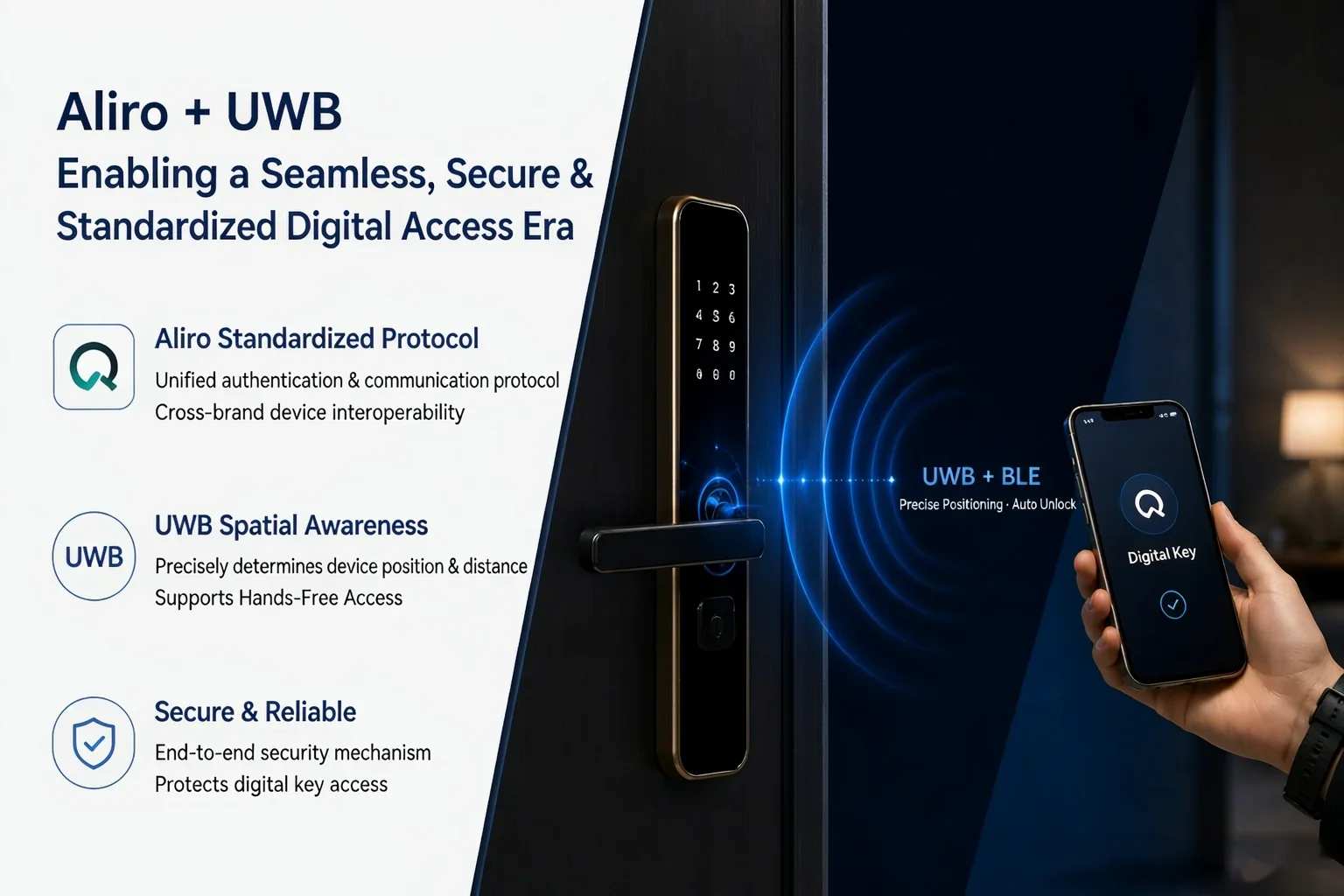
These are exactly the questions Aliro addresses. Aliro aims to enable standardized interoperability across devices and vendors through unified access credentials, communication protocols and security mechanisms. Aliro 1.0 supports NFC, BLE and BLE+UWB, with BLE+UWB enabling a more natural Hands-Free Access experience.
For the industry, this means digital access is moving away from isolated point solutions toward standardization, interconnection and ecosystem play.

2. UWB makes digital keys precise and natural
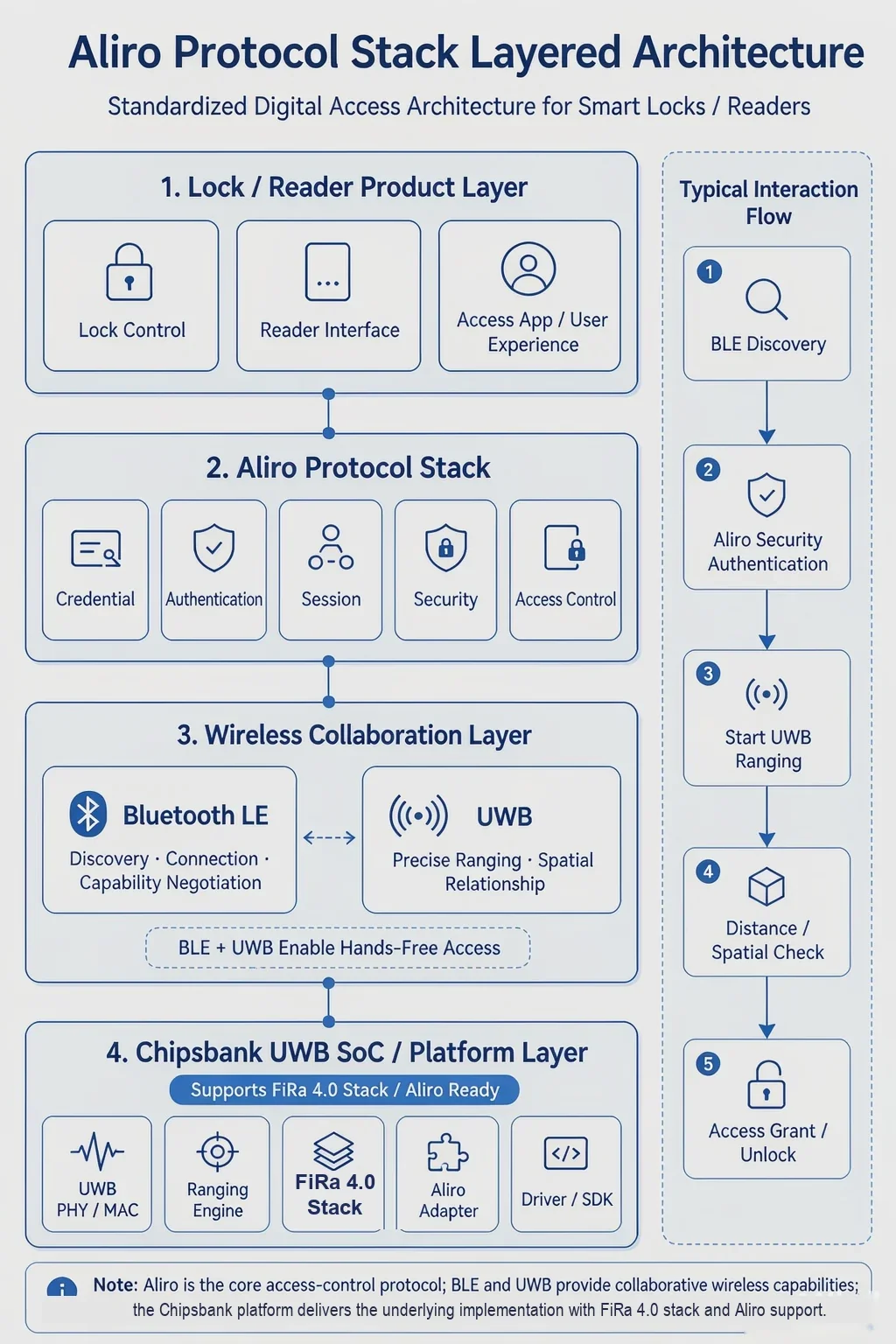
UWB is playing an increasingly important role in digital access. BLE handles discovery, connection and data exchange, while UWB adds precise spatial awareness.
BLE answers "is the device here?" — UWB answers "where exactly is it?"
When a user carrying an authorized phone or wearable approaches a lock, the system combines BLE and UWB to identify the device and determine its spatial relationship, enabling a natural hands-free experience once the security policy is satisfied. BLE + UWB + a standardized protocol is therefore becoming the defining technology stack for next-generation digital keys.
For chip vendors, offering UWB radio and ranging capability alone is no longer enough. From silicon and low-level software to protocol stacks, security mechanisms, development tools and test verification, complete software and ecosystem capability has become a core part of UWB product competitiveness.
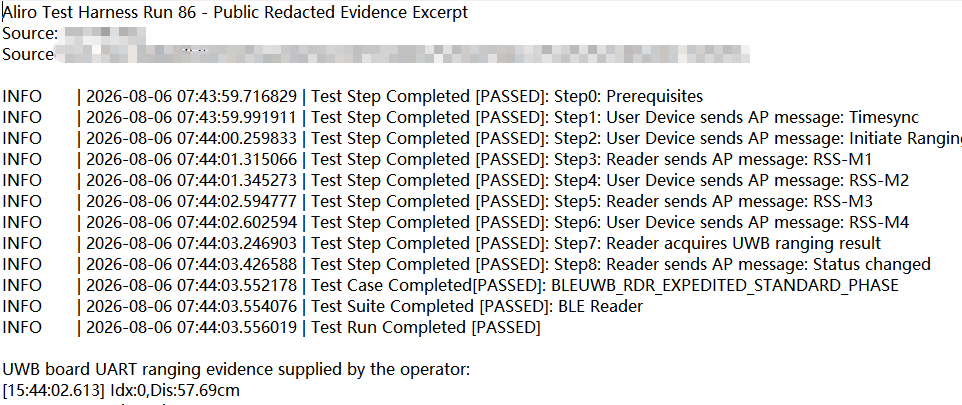
3. Chipsbank validates key Aliro protocol stack capabilities
As a UWB technology provider, Chipsbank continues to focus on deploying UWB in digital keys, smart locks and access control. Passing Aliro-related testing is a significant technical milestone toward standardized digital access.
It means Chipsbank has completed protocol stack capability verification against the relevant Aliro specifications, closing the technical loop between UWB and standardized digital access applications. Chipsbank is extending from a pure silicon capability toward "chip + protocol stack + software platform + product support."
4. Passing the test is not the finish line — shipping the product is
For customers, passing a protocol test is not the end goal. What really decides whether a technology reaches market quickly is the efficiency of the whole journey from technical validation to mass production.
If customers must build UWB protocols, BLE cooperation mechanisms and Aliro-related protocols from the ground up, R&D spending rises and time-to-market stretches. By continuously strengthening its UWB software and development ecosystem, Chipsbank aims to give customers a more complete technical foundation.
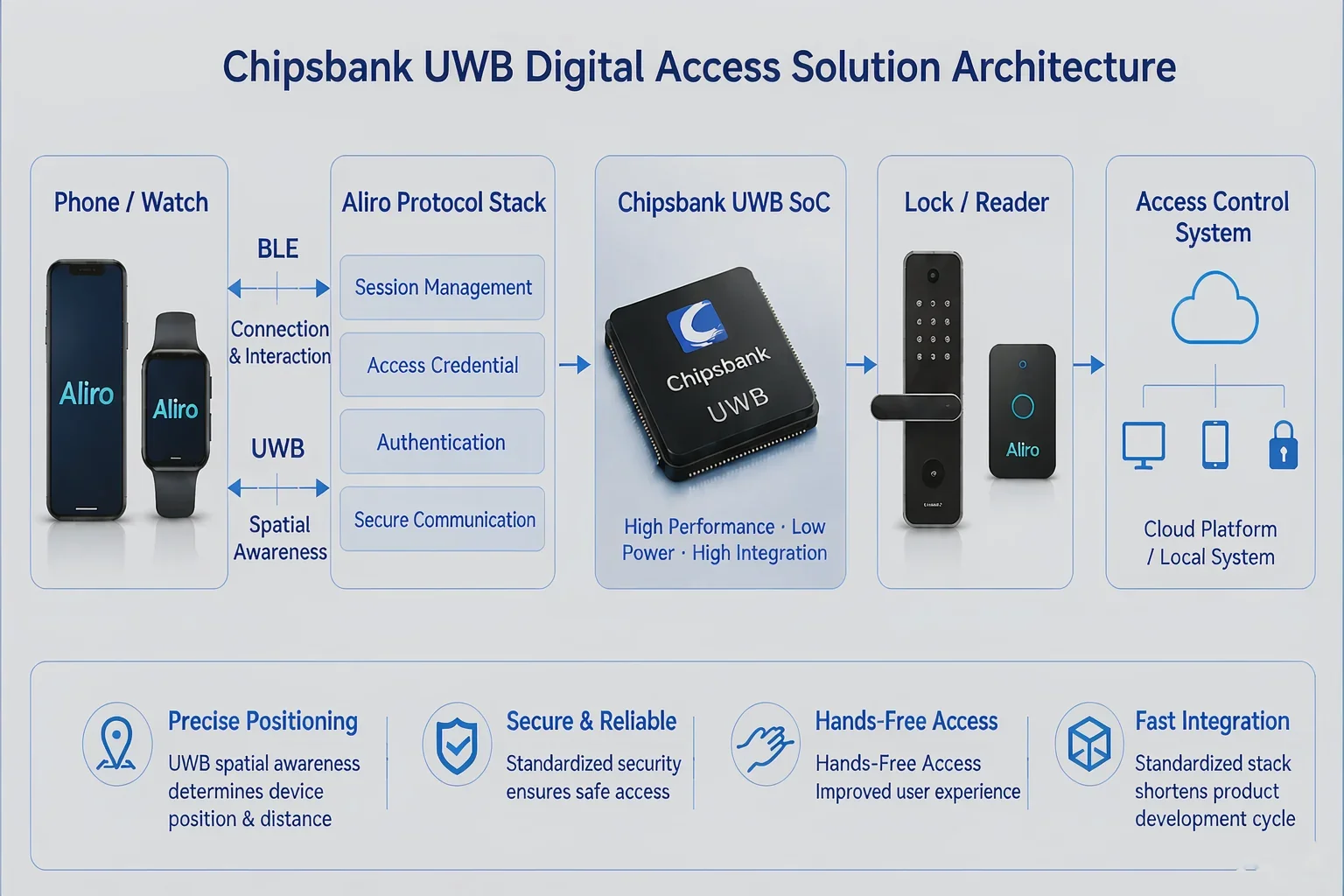
Chipsbank will build a more complete UWB digital access development offering around UWB chips, BLE cooperation, the Aliro protocol stack, an SDK and development environment, reference designs and demos, plus testing and technical support — helping customers cut low-level development work and focus their engineering resources on product definition, user experience and application innovation.
So customers move from "developing UWB technology" to "building products with UWB technology."
5. From smart locks to the broader digital access market
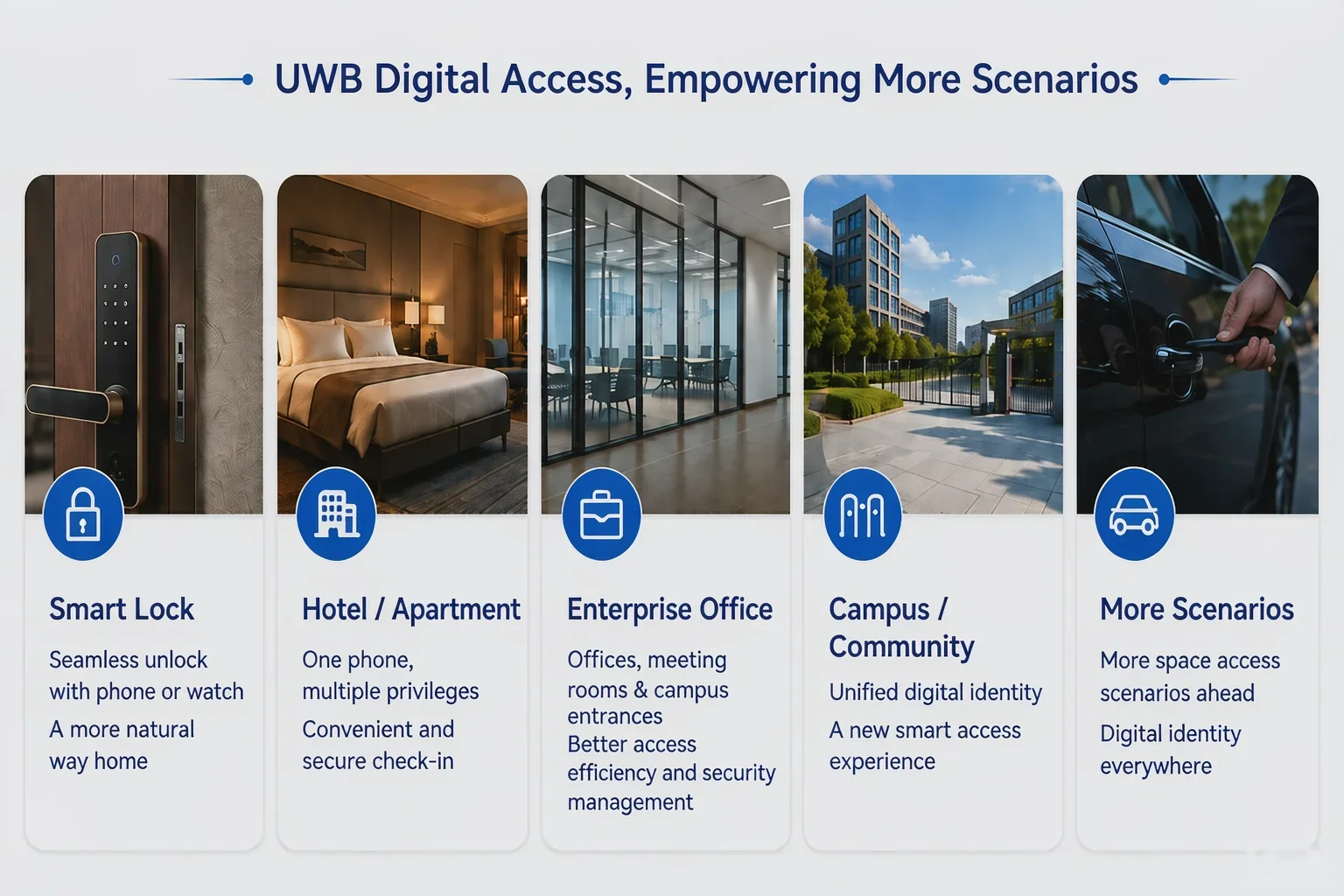
As digital identity and digital credentials continue to mature, the application space for UWB digital keys will keep expanding:
- Home — UWB turns phones and watches into a more natural household key;
- Hotels and apartments — digital credentials tied to rooms and shared areas;
- Enterprise and campuses — digital identity covering offices, meeting rooms and campus entrances;
- Smart spaces — digital keys evolving from "opening a door" to "granting access to a space."
What this requires is not just a UWB chip, but a complete foundation of standards, protocols, security and ecosystem support. The combination of Aliro and UWB therefore opens new industry opportunities for UWB chip vendors.
6. From silicon to ecosystem: Chipsbank keeps building out UWB
Passing Aliro-related testing is an important step for Chipsbank in digital access. But it is not an endpoint — it is a new starting point for serving customers and driving products to market.
Chipsbank will keep developing its UWB product and ecosystem roadmap, strengthening capabilities across UWB chips, protocol stacks, software platforms and application solutions. Through a more open, complete and efficient development system, we aim to lower the barrier to UWB development and shorten the path from solution validation to mass production.
From chip to protocol, from standard to product, from technical capability to industry ecosystem. Chipsbank will keep advancing UWB in digital keys, smart locks and access control, giving users a more precise, secure, convenient and natural access experience.
