Smart AC
Directs airflow away from occupants or toward them from a distance; energy-saving when people leave.

One CBU5000V210 delivers presence sensing, pointer remote control and keyless vehicle access. No camera, and it works through panels and seats, covering near-field sensing from home appliances to two-wheelers.
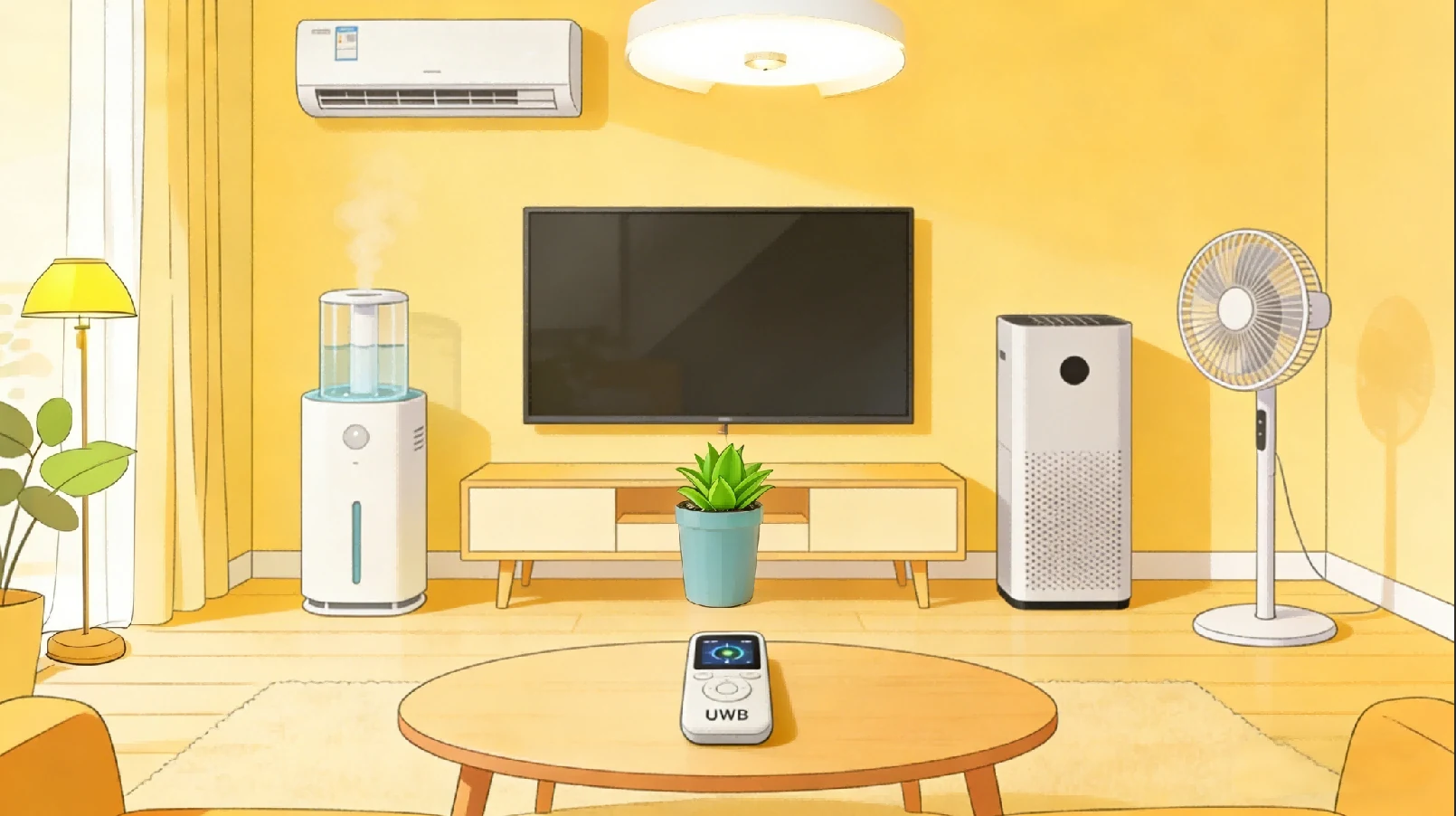
One UWB radar sensing + pointing remote capability covers air conditioners, TVs, fans, lighting, air purifiers, humidifiers, infant sleep monitoring and electric scooters.
Directs airflow away from occupants or toward them from a distance; energy-saving when people leave.
Auto-on when approaching, energy-saving off when leaving; UWB pointing remote.
Runs when people are present, stops when they leave; tracks the occupant and directs airflow accordingly.
Light on when present, light off when gone, avoiding direct glare. Air purifiers and humidifiers start when approaching and save energy when away.
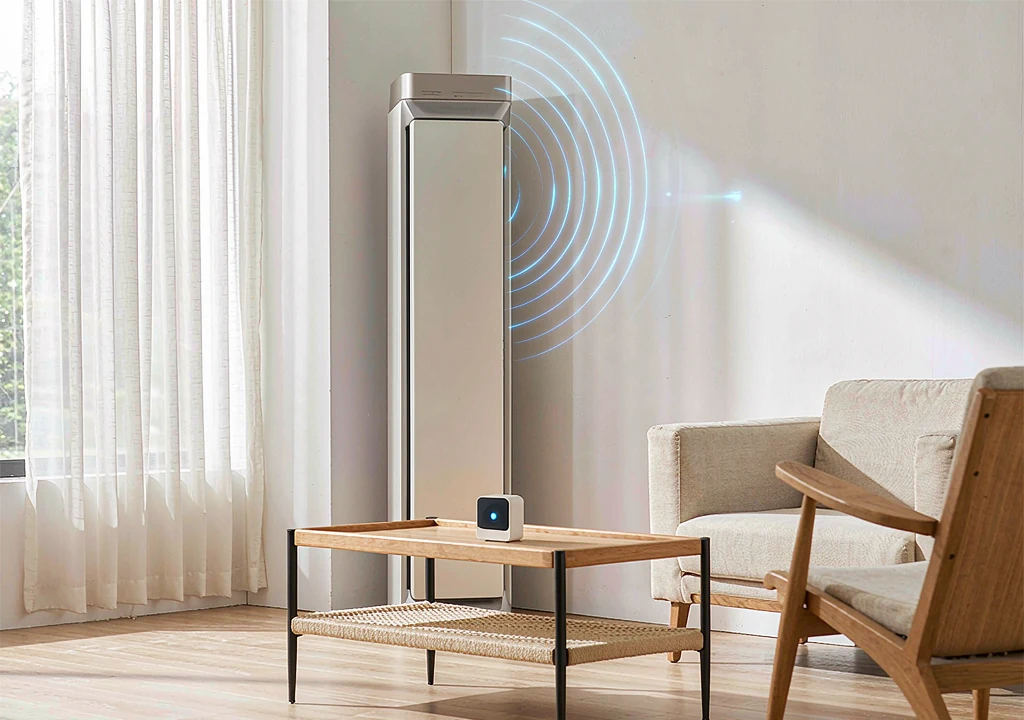
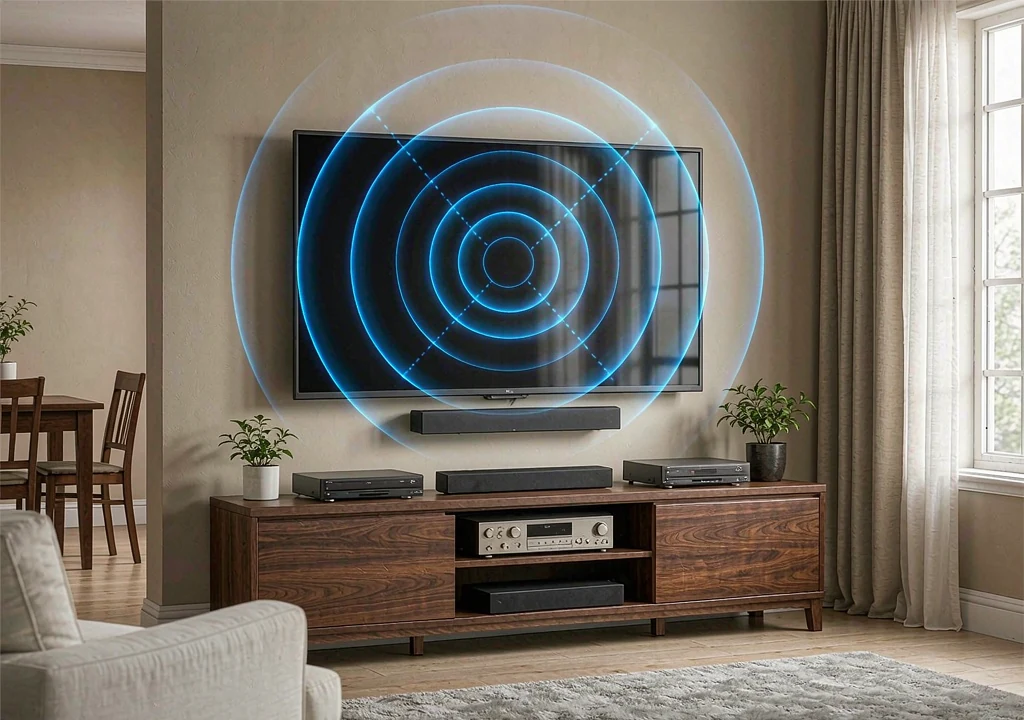
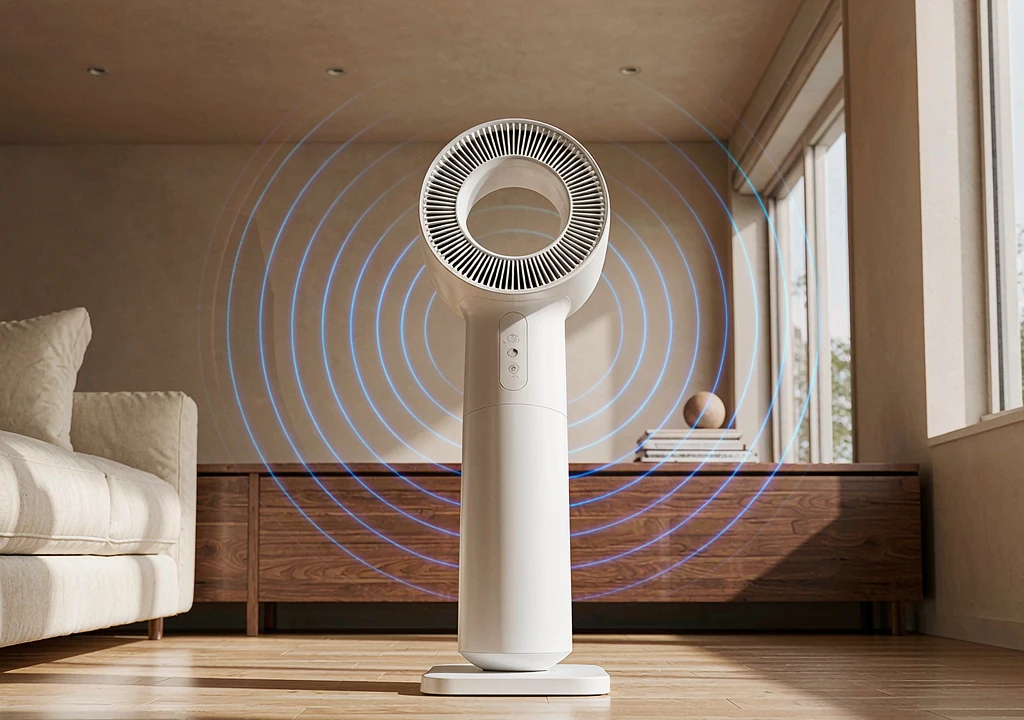
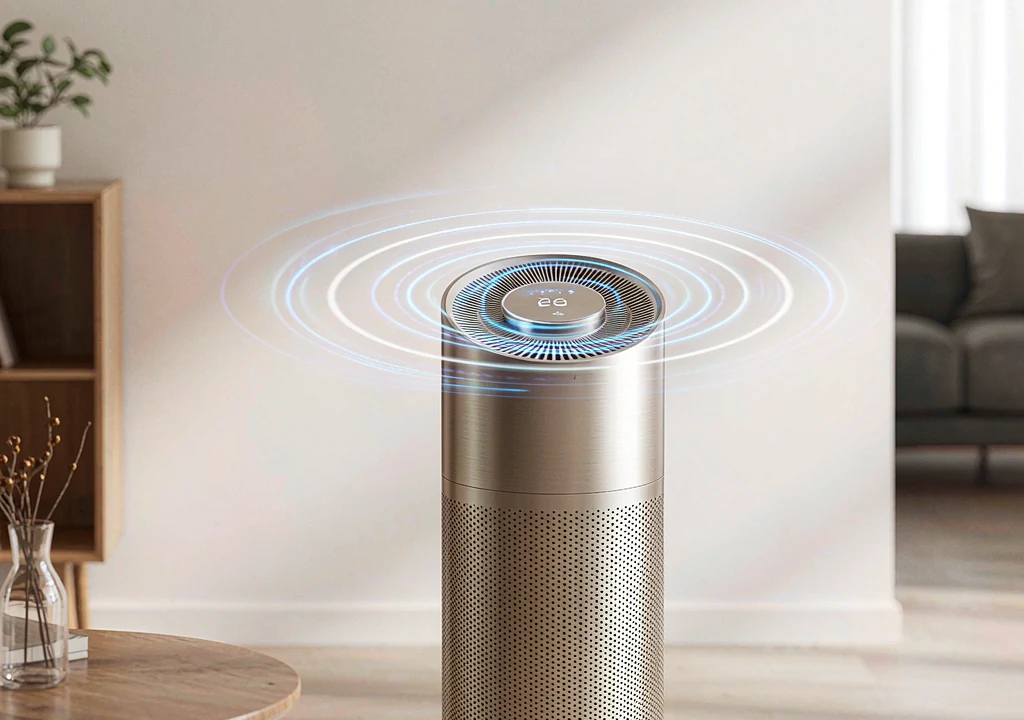
Compared with traditional mmWave radar, UWB radar enables collision warning and blind-spot detection while also reusing the same RF for UWB keyless vehicle unlock.
Radar sensing and identity authentication usually require two separate systems, increasing cost and integration complexity.
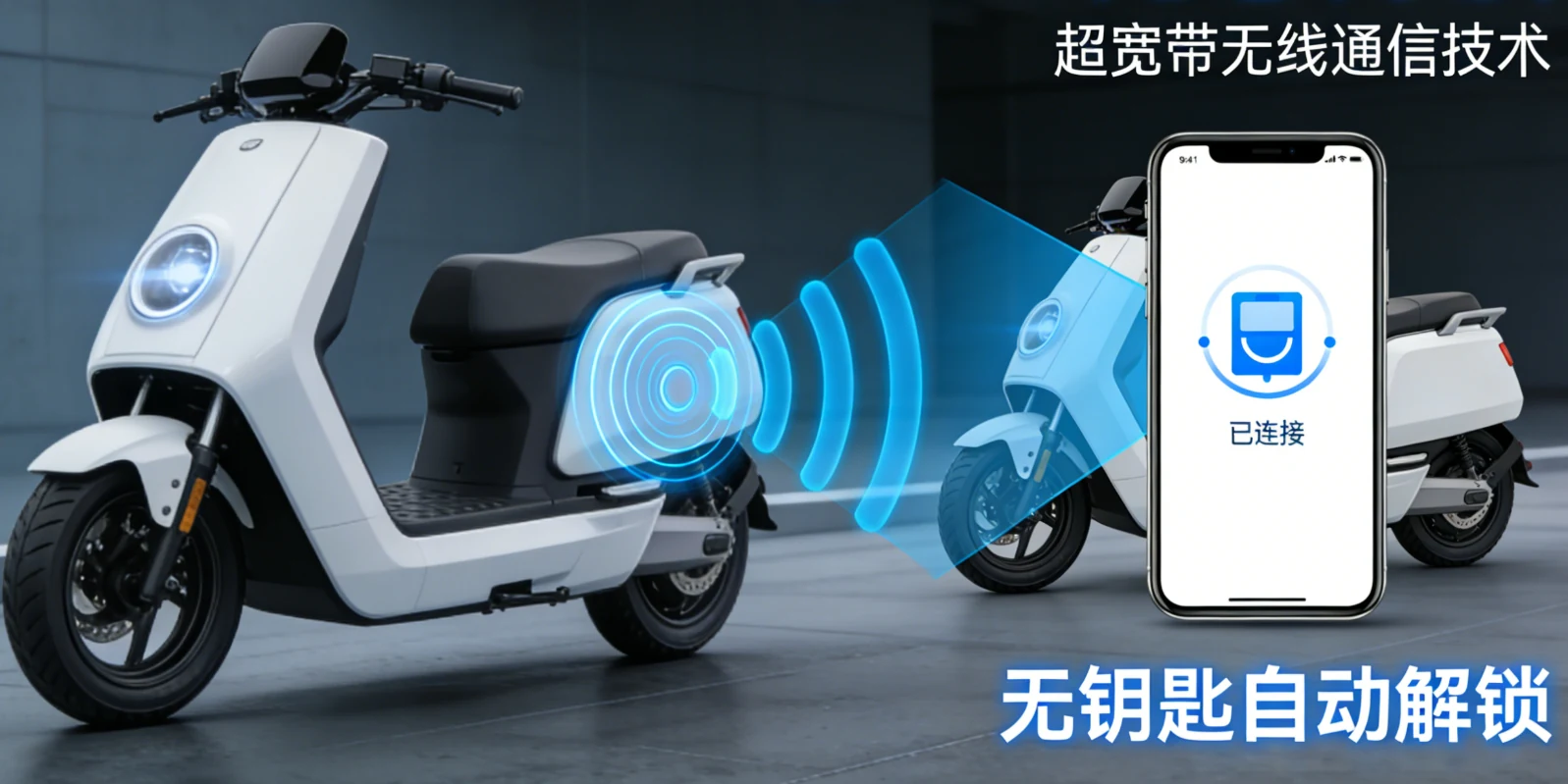
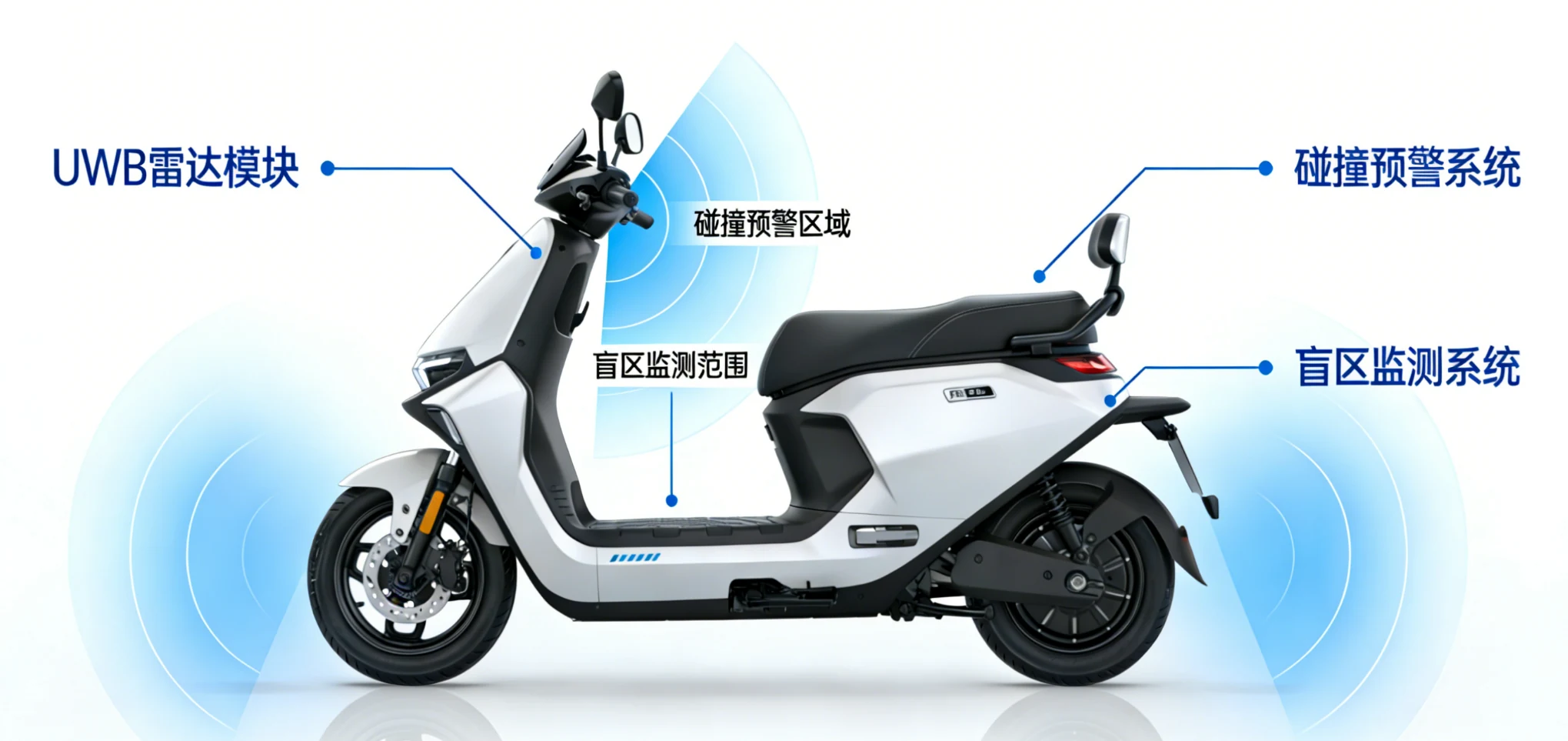
The same chip can act as UWB radar, digital key or pointing remote, reducing BOM.
Based on the UWB mobile ecosystem, radar can interact with phones for hands-free control and device linkage.
Multi-dimensional range, angle and velocity estimation with 30 cm range resolution and 36 m theoretical max range.
Can operate through certain non-metallic materials, including wood and acrylic, depending on thickness and installation.
RF-based sensing without cameras, suitable for bedrooms, bathrooms and other privacy-sensitive spaces.
Radar detects approaching people and actively triggers the system, reducing standby power.
In near-field sensing the two are close: human presence, trajectory tracking, centimeter-level ranging, angle measurement and material penetration are all achievable with 24 GHz radar, with only a difference in penetration strength. The real divide is functional scope: communication control and mobile-ecosystem interoperability are unique to UWB, so one UWB set can serve both sensing and identity authentication, whereas a 24 GHz implementation of the same functionality usually requires additional communication and authentication modules.
Key differences
Both can do all of these
24 GHz radar covers all of these too; only penetration strength differs slightly.
On sensing hardware alone, 24 GHz radar costs less. Once digital keys, pointer remote control and device interlock are counted into the system cost, the UWB sensing-and-communication approach is usually lower: one UWB set covers both sensing and identity authentication, while a 24 GHz approach typically needs several radar modules plus separate communication hardware. Lower power draw and smaller size also make UWB a better fit for battery-powered and lightweight designs.
mmWave radar is stronger overall in long-range detection, angular resolution and velocity measurement; UWB radar is comparable in near-field ranging accuracy and leads in penetration, power consumption and functional reuse.
| Metric | UWB - 8 GHz | mmWave - 24G | mmWave - 60G | mmWave - 77G |
|---|---|---|---|---|
| RD Map - range resolution | 30 cm (B = 500 MHz) | 60 cm (B = 250 MHz) | 3 cm (B = 5 GHz) * | 5 cm (B = 3 GHz) |
| RD Map - max range | The theoretical maximum depends on the CIR length and is typically greater than 30 m. | Typically > 30 m | Typically > 30 m | Typically > 30 m |
| RD Map - velocity resolution | 3.75 cm/s | 1.25 cm/s | 0.5 cm/s | 0.4 cm/s |
| RD Map - max velocity | 1.875 m/s | ±9.38 m/s | ±1.25 m/s | ±1.00 m/s |
| Max allowed power | -14 dBm | 20 dBm | 40 dBm | 55 dBm |
| Wavelength / attenuation / antenna size | 37.5 mm / slowest attenuation / largest antenna | 12.5 mm / slower attenuation / larger antenna | 5.0 mm / faster attenuation / smaller antenna | 3.9 mm / fastest attenuation / smallest antenna |
The resolution gap comes from bandwidth, and bandwidth is bounded by regulation. The 30 cm of UWB corresponds to 500 MHz; 3 cm at 60 GHz needs 5 GHz of bandwidth, which has no type-approval basis in China; 5 cm at 77 GHz is legal, but that band is reserved for automotive radar.
Lower power is the design premise for wideband coexistence, not a capability ceiling. The -14 dBm of UWB is consistent with China's -41 dBm/MHz EIRP spectral density limit, so it is a regulatory ceiling rather than chip output. UWB trades 500 MHz-class instantaneous bandwidth for correlation processing gain, coexisting with existing narrowband systems at very low spectral density. IEEE 802.15.4ab adds a further 3.5 dB by halving the transmit packet length, and up to 12 dB of link gain through coherent combining of ranging segments.
Maximum velocity is set by the pulse repetition interval and is configurable. v_max = λ / (4 × Tc): with λ = 37.5 mm at 8 GHz and Tc = 5 ms this gives 1.875 m/s, matching the table; reducing Tc to 1 ms yields roughly 9.4 m/s in theory. Velocity resolution is set by total dwell time (λ / (2 × Tf) = 3.75 cm/s at Tf = 500 ms) and does not change with Tc. Achievable configurations depend on chip support and measured algorithm performance.
A longer wavelength buys penetration and diffraction at the cost of antenna size. A 37.5 mm wavelength lets UWB penetrate non-metallic materials such as clothing, plastic, wood and vehicle seats, with stronger diffraction, so it can be hidden inside panels or bumpers for a seamless exterior; the corresponding half-wavelength antenna spacing of about 19 mm makes the antenna the largest of the four, which is a physical necessity.
* Frequency compliance for the bands above: UWB 7163-8812 MHz is explicitly designated by MIIT for communication, positioning, ranging and sensing (MIIT No. 2024-77); 24-24.25 GHz is the statutory frequency for short-range detection radar in China (MIIT Announcement No. 52 of 2019); 76-79 GHz is the statutory frequency for automotive radar, limited to exterior vehicle sensing, and is not permitted for other types of ground-based radar (MIIT No. 2021-181); 59-64 GHz is not listed among the 19 radar types in the Regulations on Radio Management of Radar (Trial) (MIIT No. 2025-22), which takes effect on 1 January 2026, after which radar equipment not conforming to that regulation will no longer be accepted for type approval. The 3 cm resolution at 60 GHz above therefore lacks a type-approval basis in China, whereas the 5 cm at 77 GHz is legally achievable.
It transmits nanosecond-wideband pulses, receives signals reflected from targets, and analyzes delay, amplitude and phase.
Continuous tracking up to 10 meters, supporting normal movement and static detection.
Continuous tracking up to 10 m
Static/motion switch, observing accuracy every 1 m
From reference design and algorithm tuning to mass-production support — one-stop delivery that shortens time to market.